Malting plant control
- Plant
- Industrial malting plant
- Section
- Steeping, germination and utility distribution
- Scope
- From functional specification to trial batch
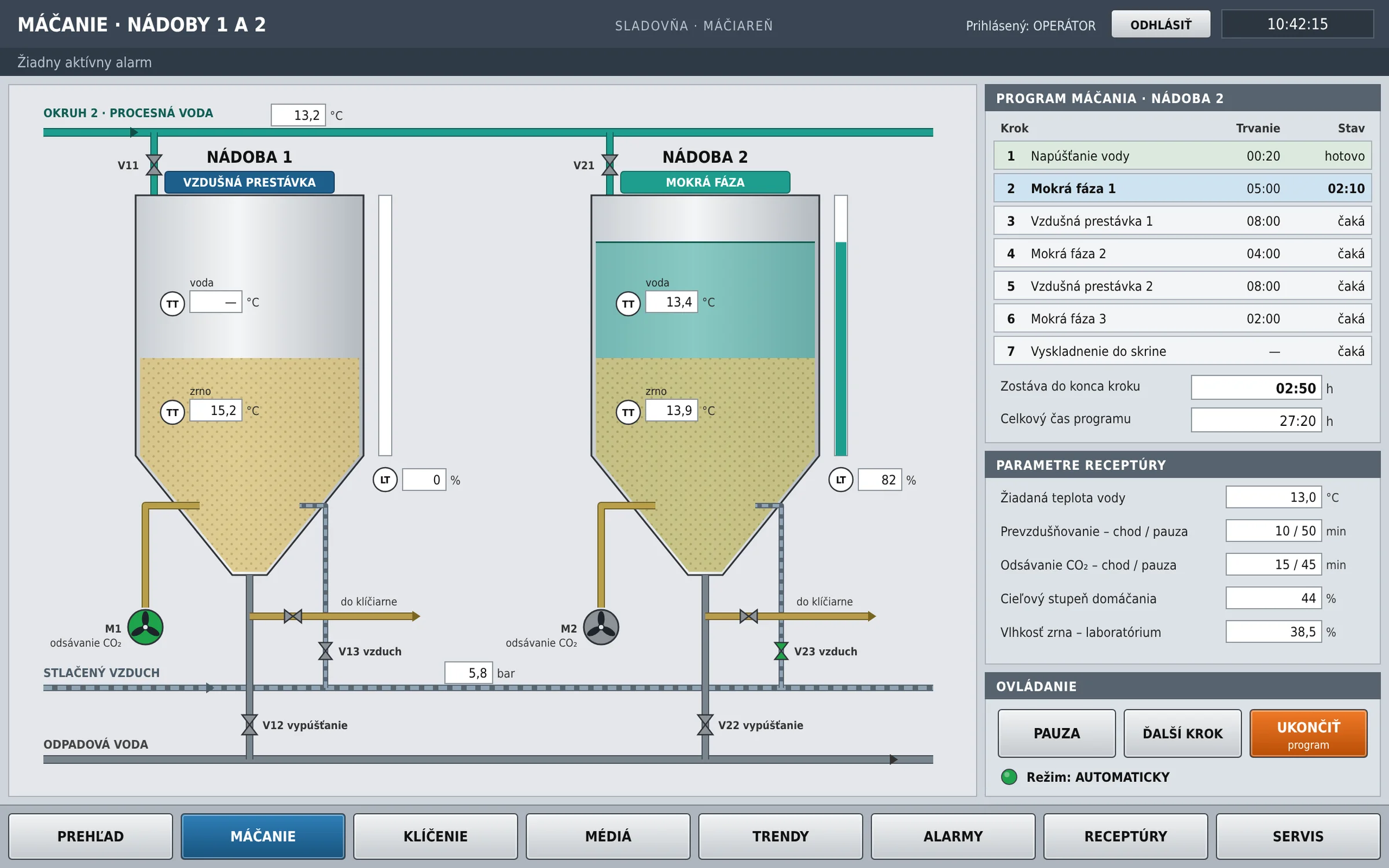
- 2steeping vessels
- 4germination boxes, each with its own air handling
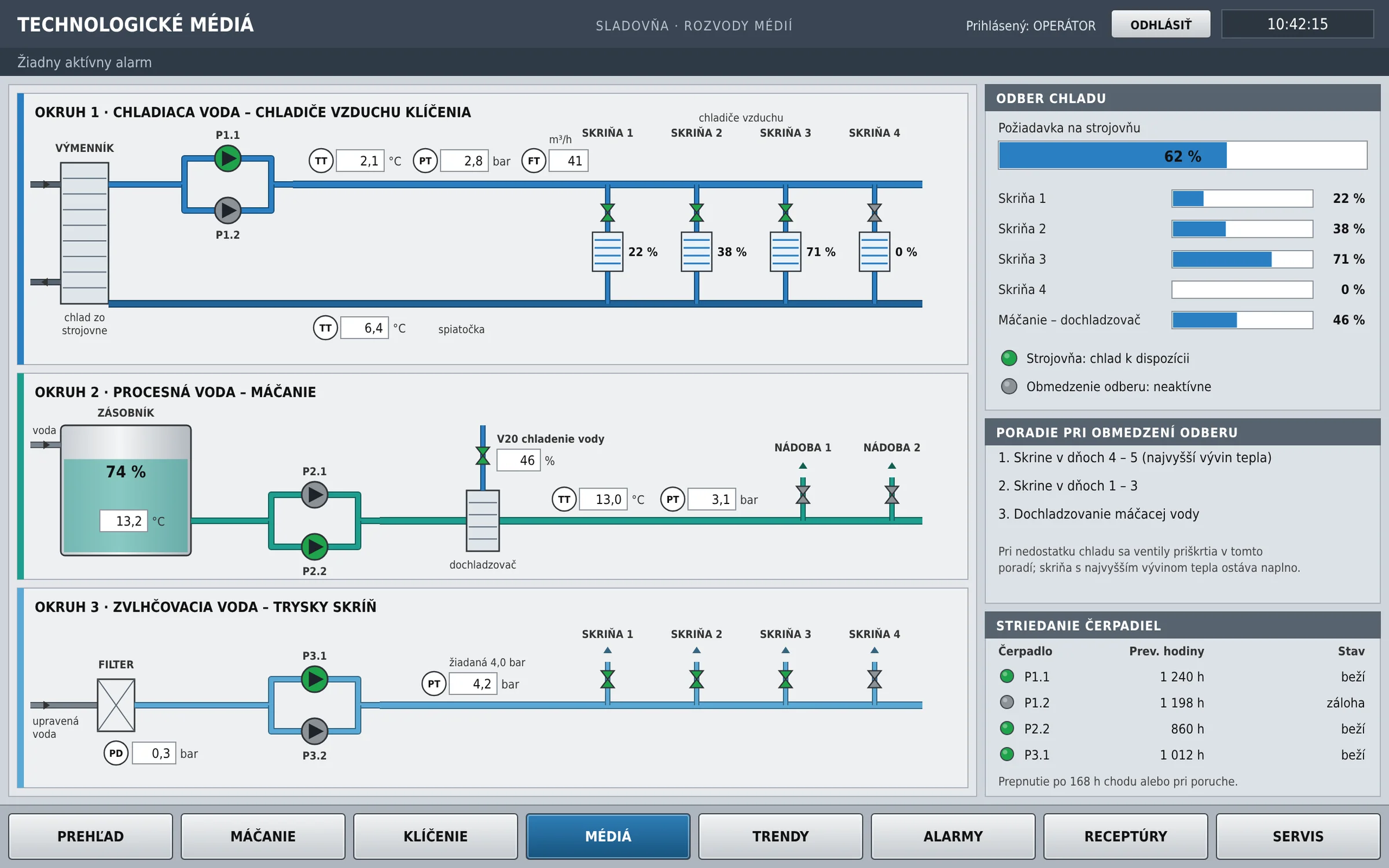
- 3utility circuits: cooling, process and humidification water
- 196signals, 184 of them hardwired
- 8screens, 3 access levels
- 30alarms in two classes, each with a trigger condition and a system response
Starting point
Operators set valves and dampers by hand, going by the clock and by temperatures read on site. Batch quality depended on the shift, and the refrigeration plant room had no advance notice of the malting plant’s demand.
Goals
- The batch runs to the technologist’s recipe.
- Bed temperature holds for five days without intervention.
- Outside air does the cooling first.
- A single fault does not stop the batch.
Platform
SIMATIC S7-1500, ET 200SP, PROFINET, TP1200 Comfort panel, Danfoss drives, Endress+Hauser sensors.
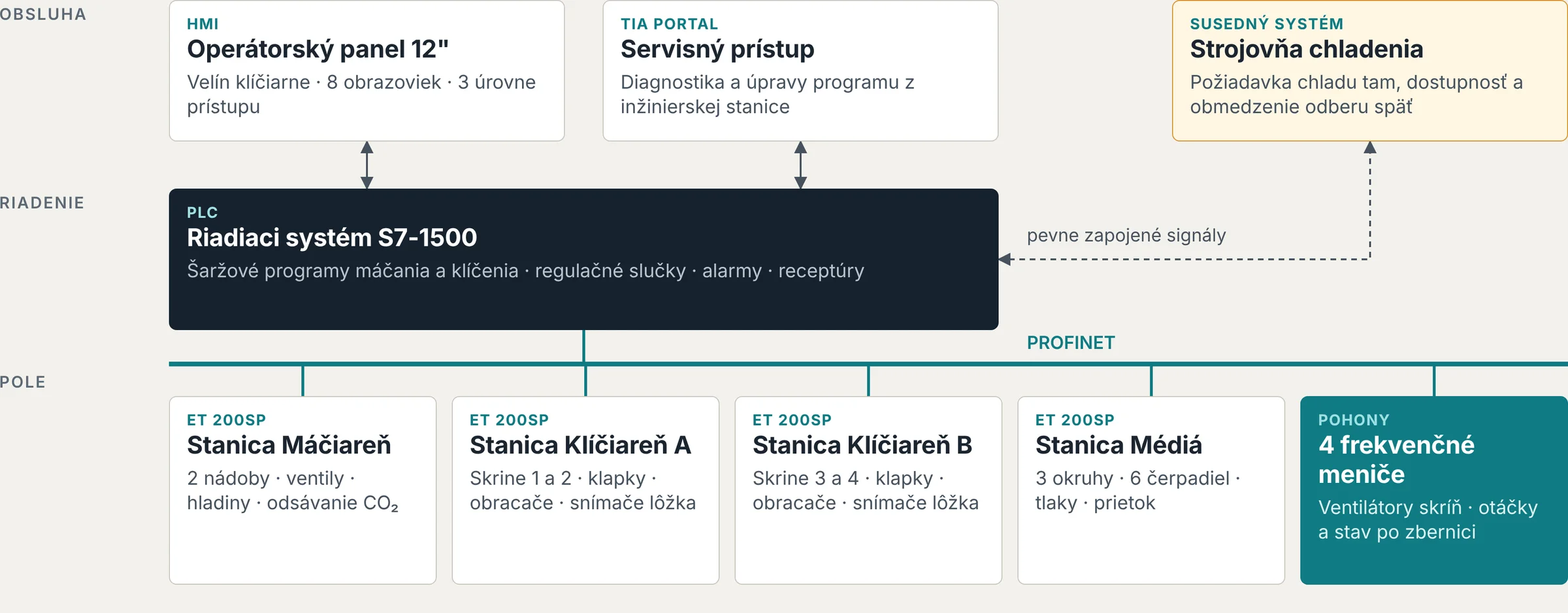
Control functions
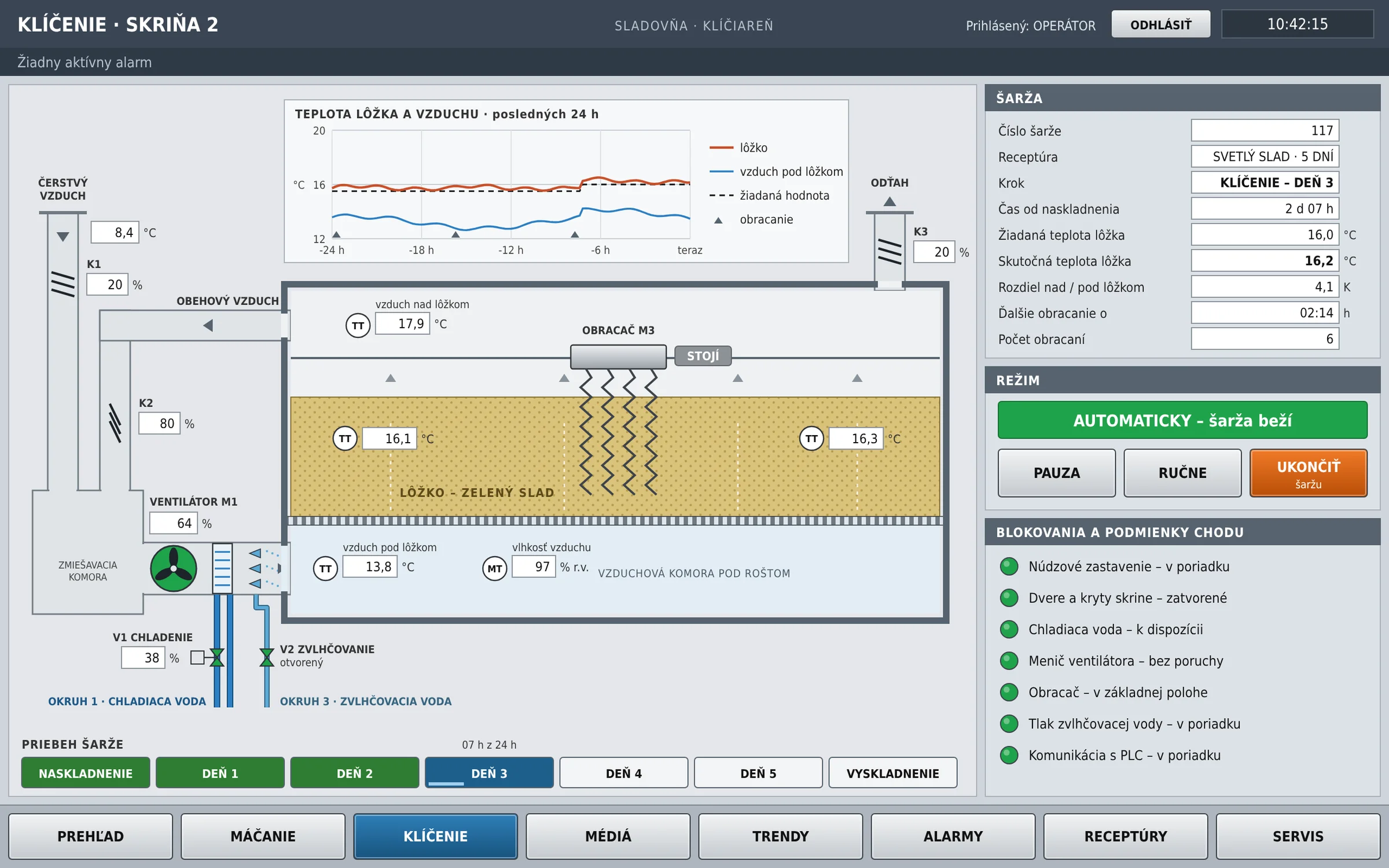
- Cascade control of bed temperature. The master controller sets the air temperature under the floor; the slave controller reaches it with the dampers and the cooler. Two sensors measure the bed; if one fails, control continues.
- Outside air before the cooler. While it is cooler outside than above the bed, cooling uses the ratio of fresh to recirculated air. Only then does the chilled-water valve open.
- Managed cooling demand. The malting plant sends its demand to the plant room. When cooling is short, it throttles its own consumers in order of priority; boxes on day four and five are protected longest.
- The batch survives a power failure. The program step, elapsed time and batch number stay in memory. When power returns, the system offers to continue and waits for the operator to confirm.
How the project ran
Seven steps from the site survey to operator training.
- Analysissite survey, interviews with the process technologist
- Specificationsequences, signals and alarms
- ProgramPLC and screens, simulation
- FATtest with shortened timers
- Commissioningevery signal from sensor to screen
- SATtrial batch with grain
- Handoveroperator training and documentation
HMI
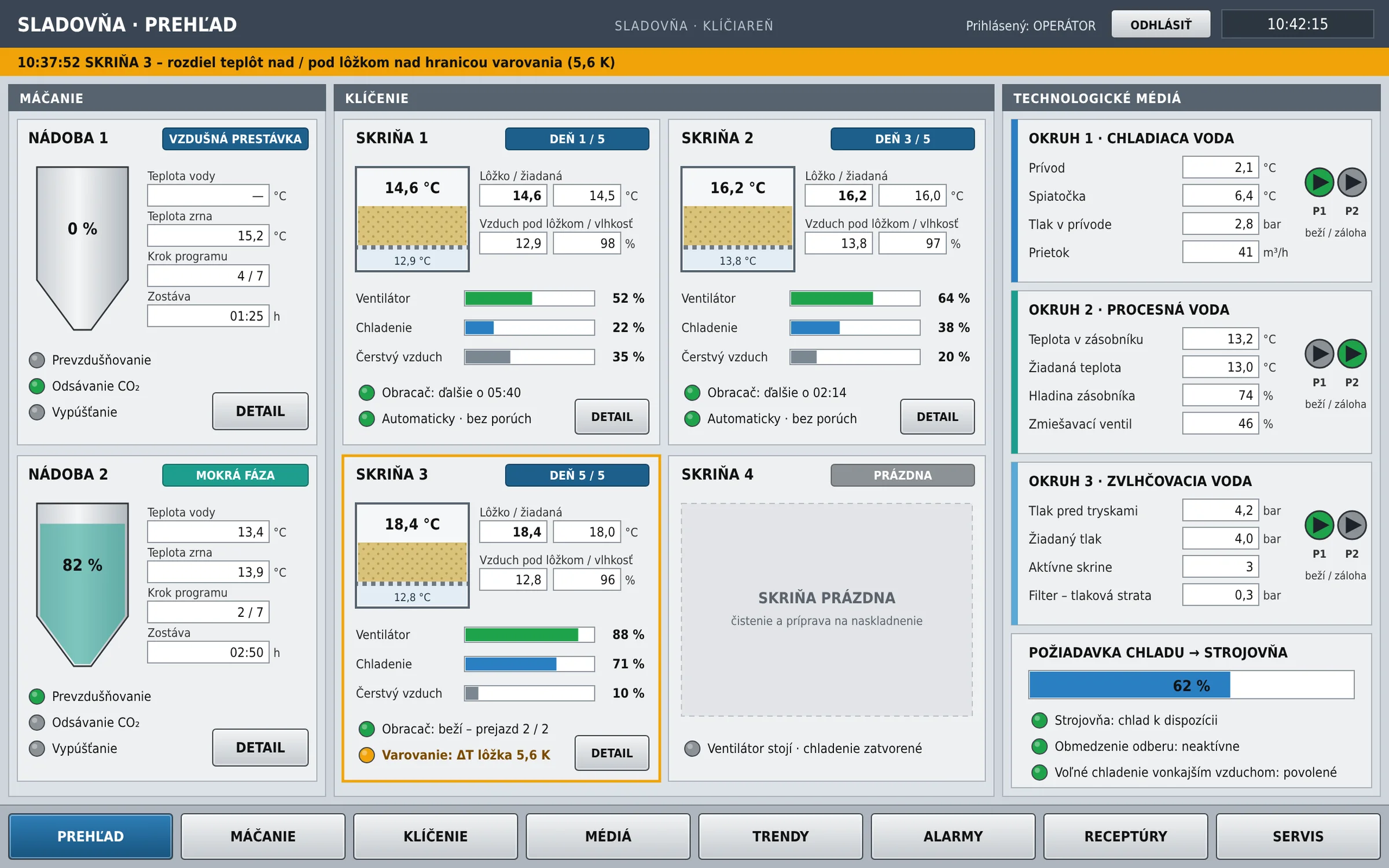
Vessels show the program step and the remaining time. Boxes show the batch day, bed temperature against setpoint, and fan and cooling load. A box with a warning is outlined, with the reason written inside it. The total cooling demand going to the plant room is shown on the right.
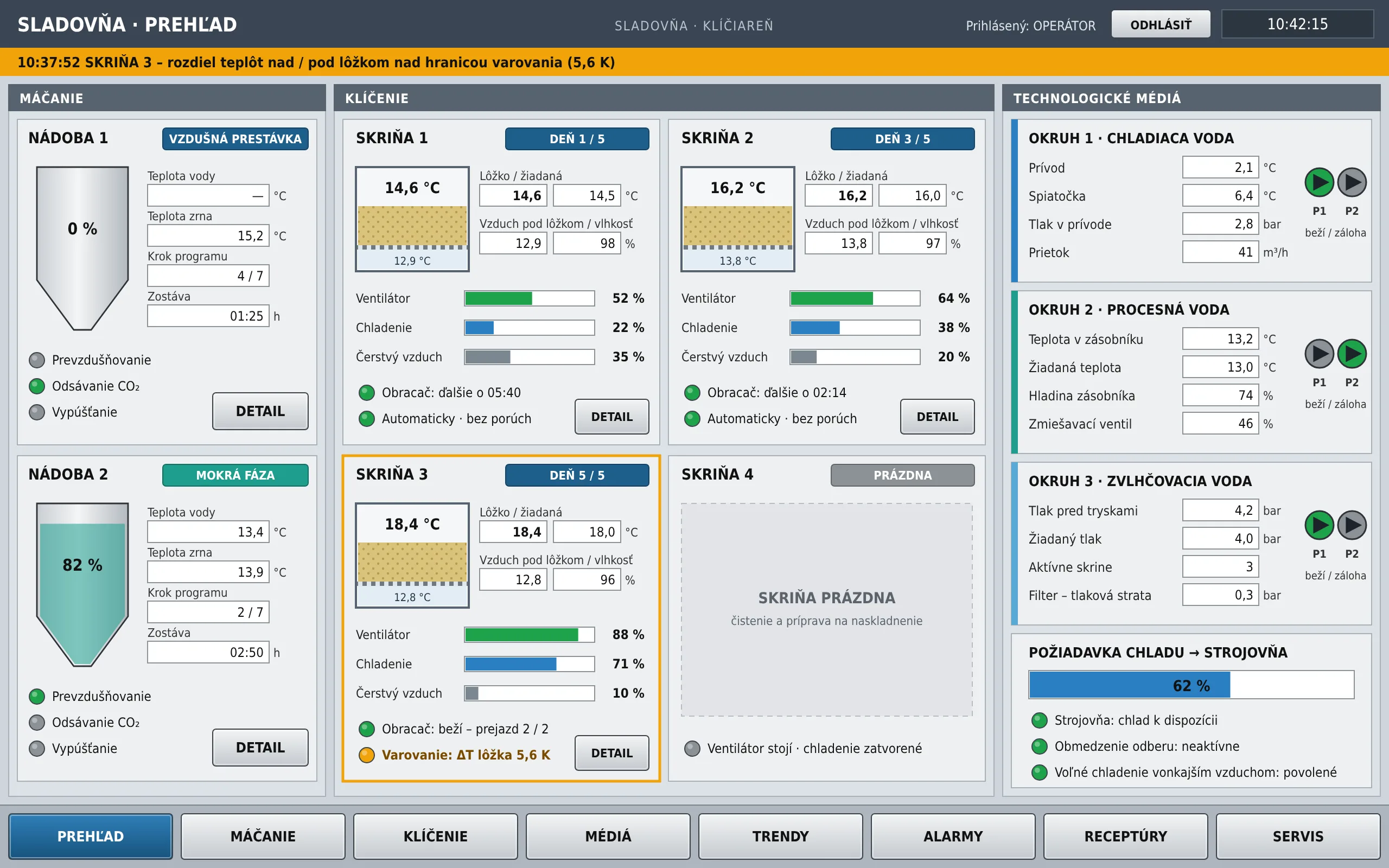
Overview. The screen is redrawn; values are illustrative. 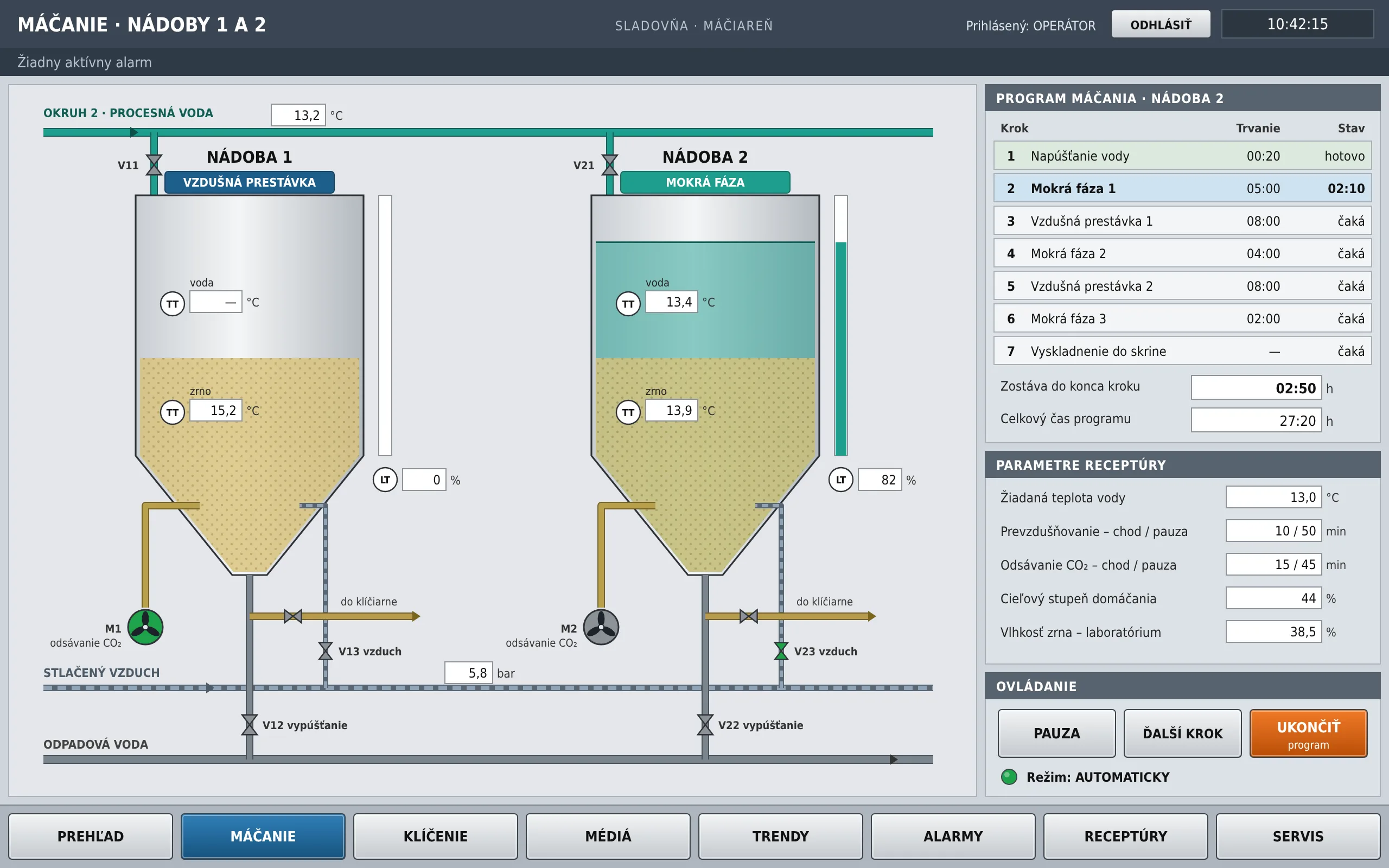
Steeping. The steeping house drawn the way it is connected, with the steeping program and recipe parameters. The screen is redrawn; values are illustrative. 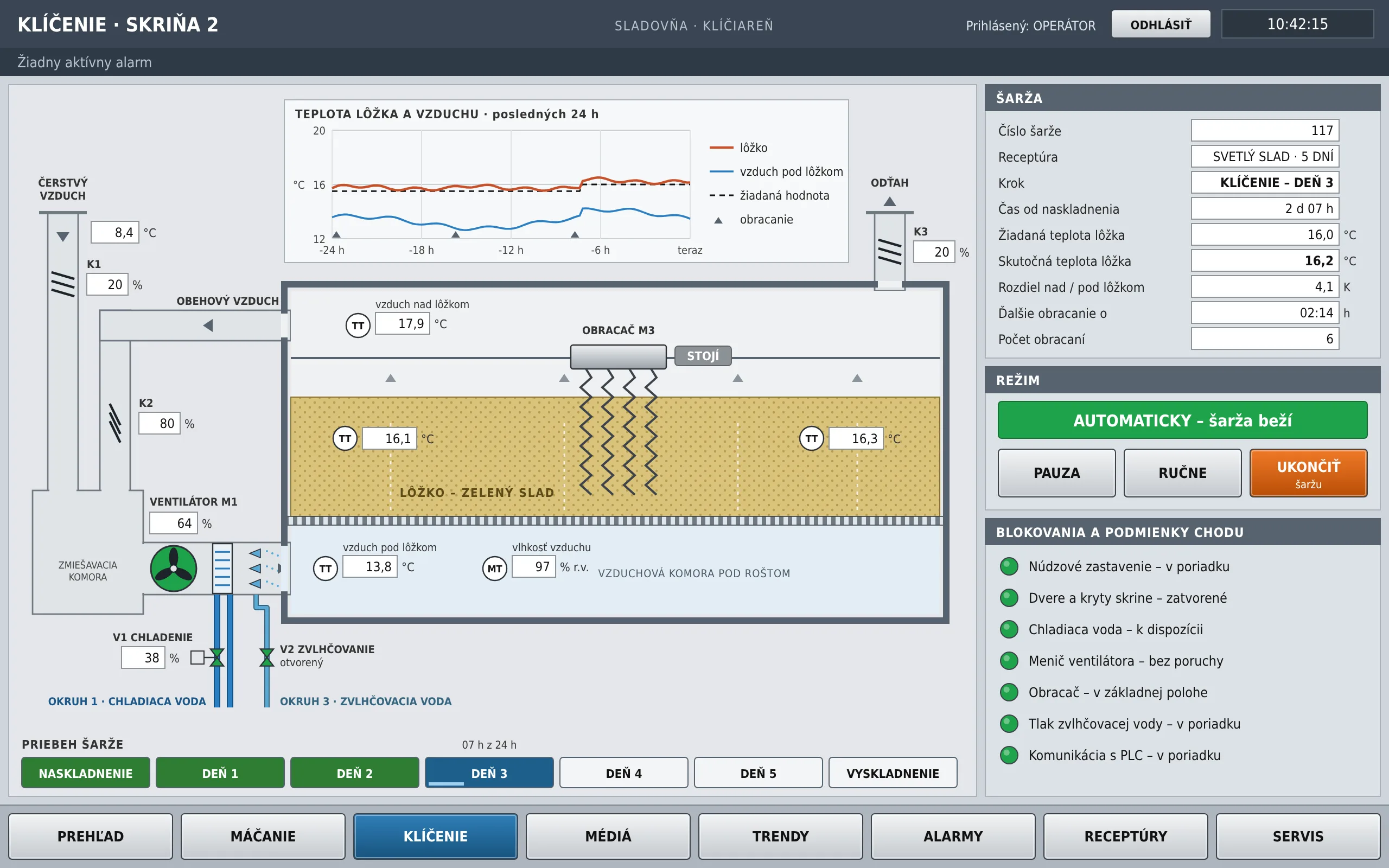
Germination. A germination box with its air handling, batch progress and run conditions. The screen is redrawn; values are illustrative. 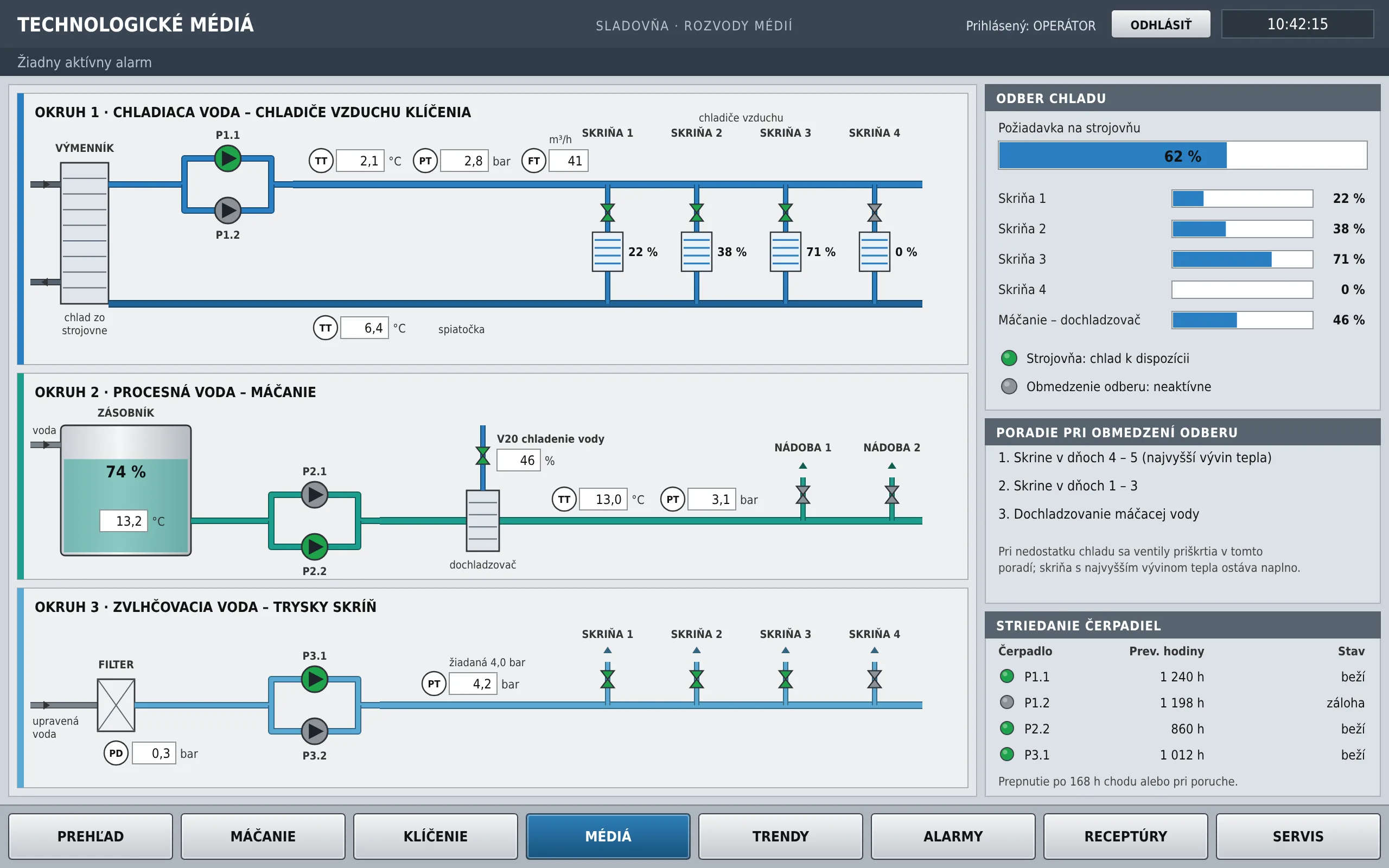
Utilities. The three utility circuits with their pumps, cooling demand per box, and the order in which consumers are throttled when cooling is short. The screen is redrawn; values are illustrative. 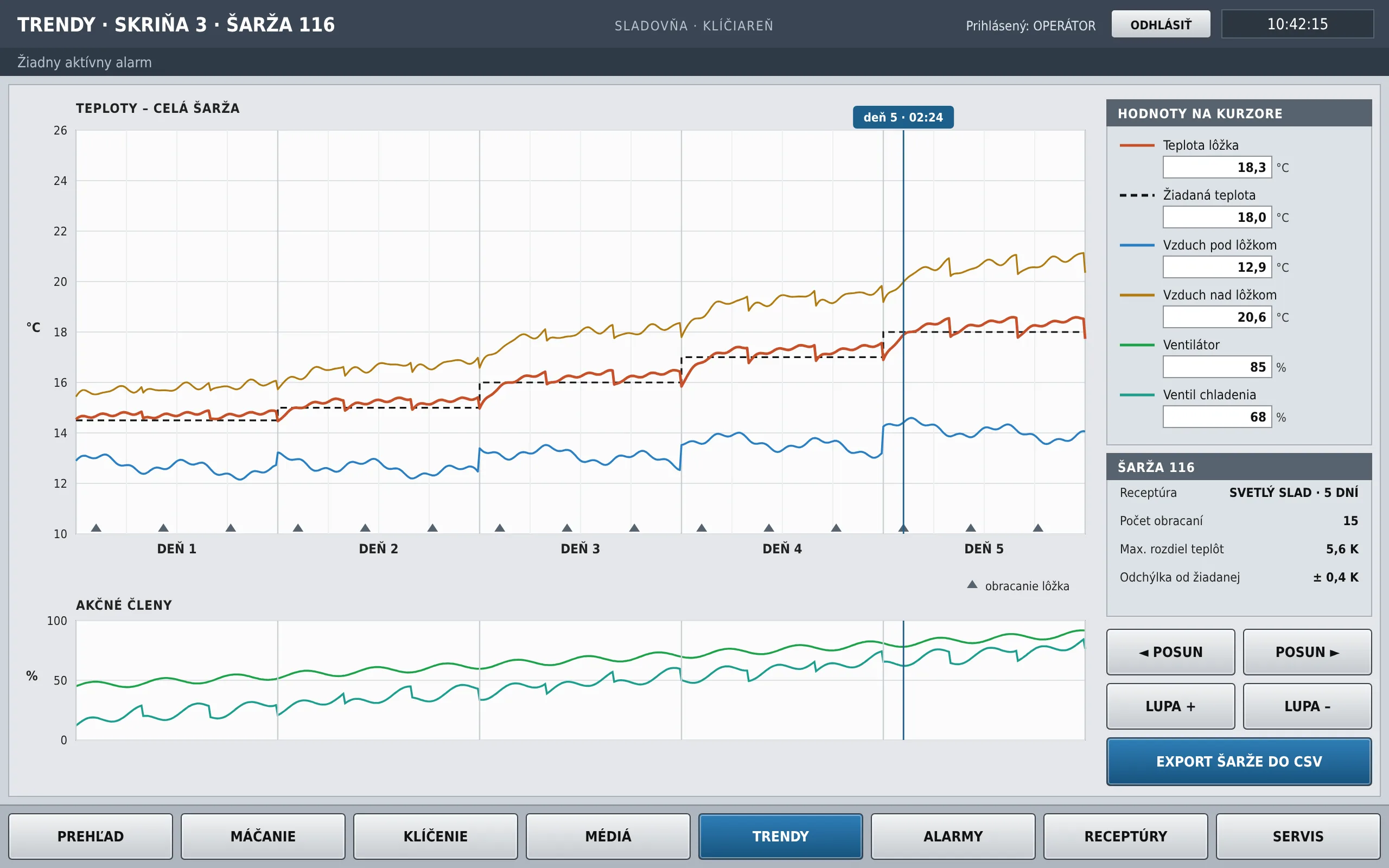
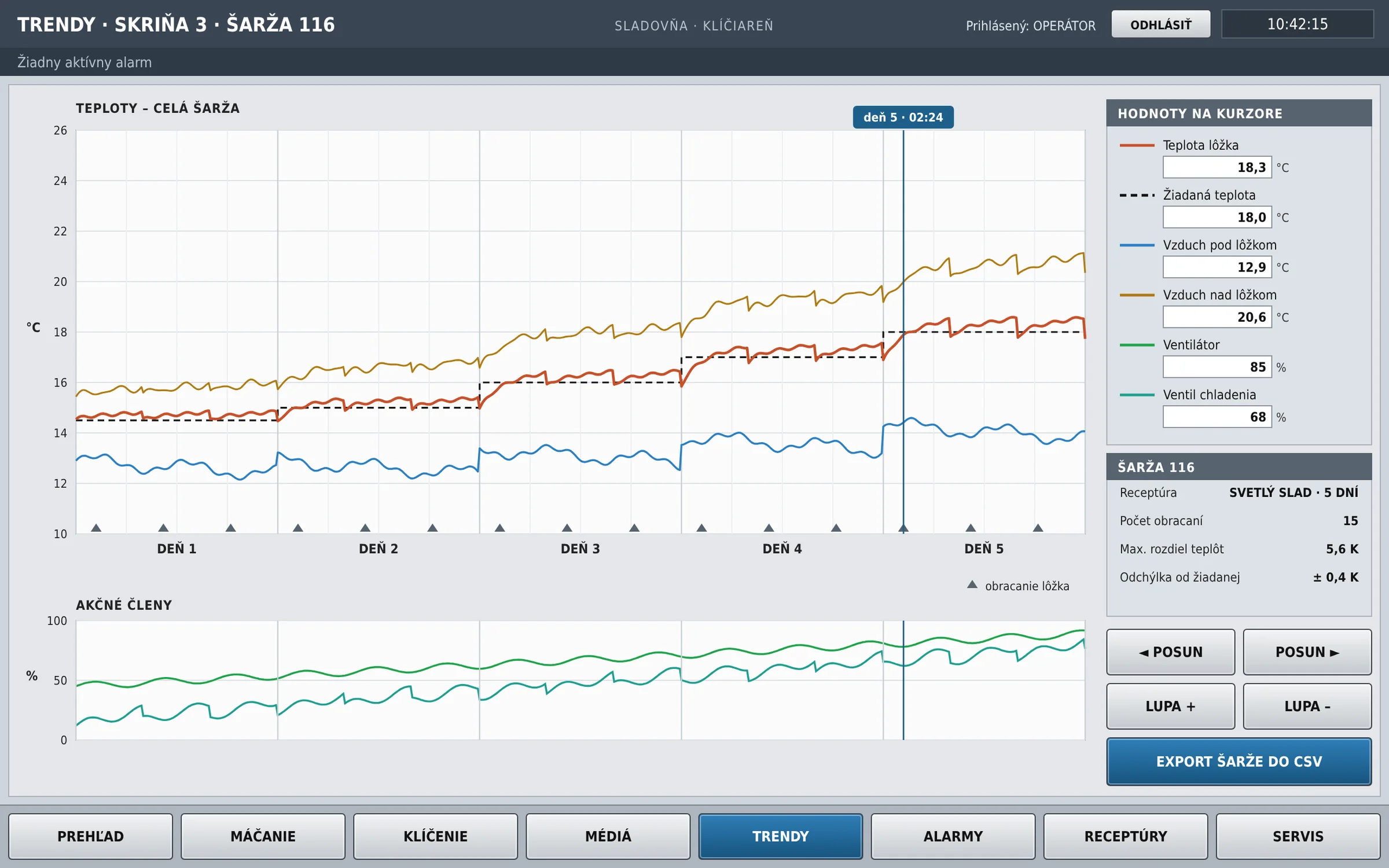
Trends. Temperatures and actuators over the whole batch, with values at the cursor. The screen is redrawn; values are illustrative. 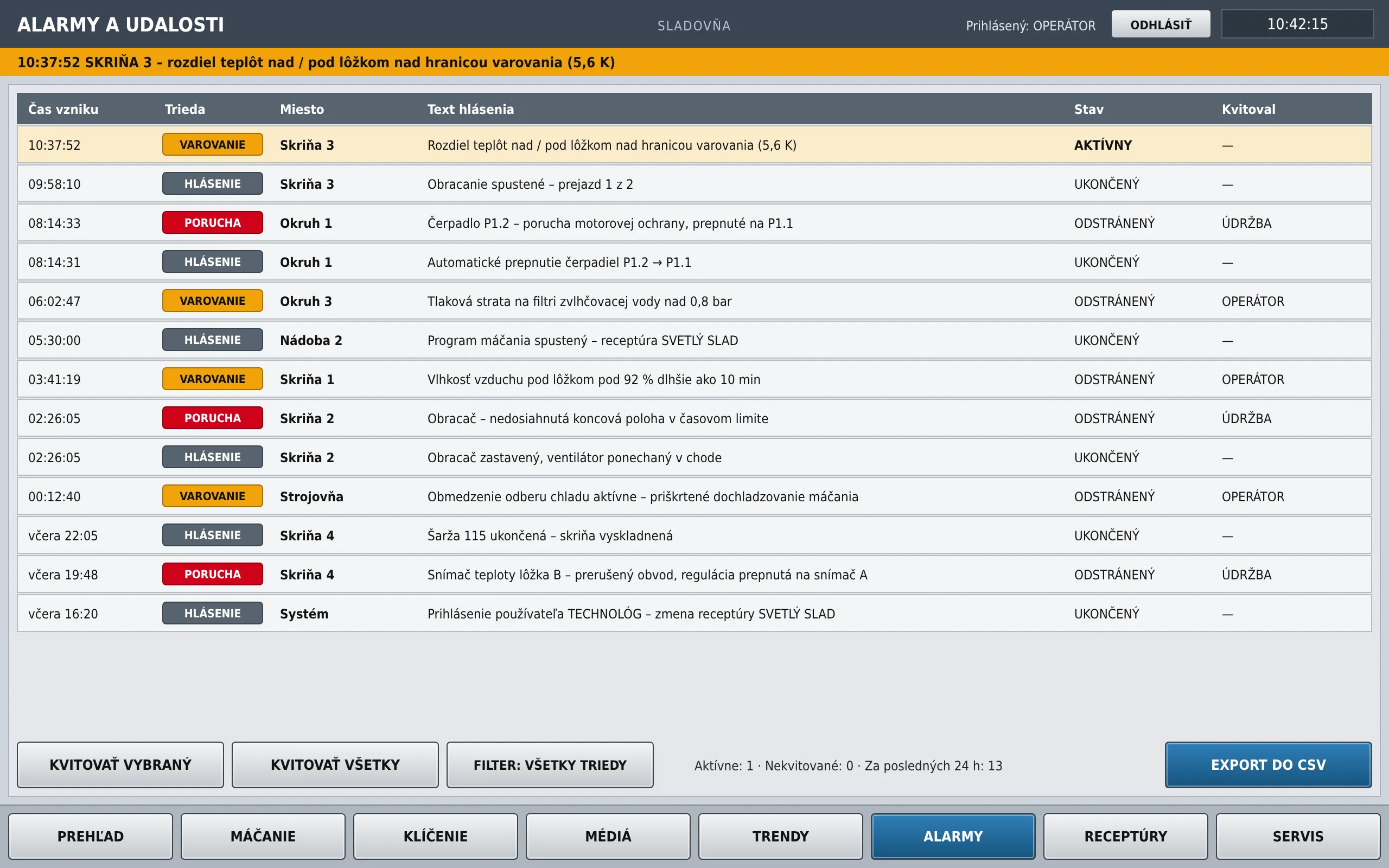
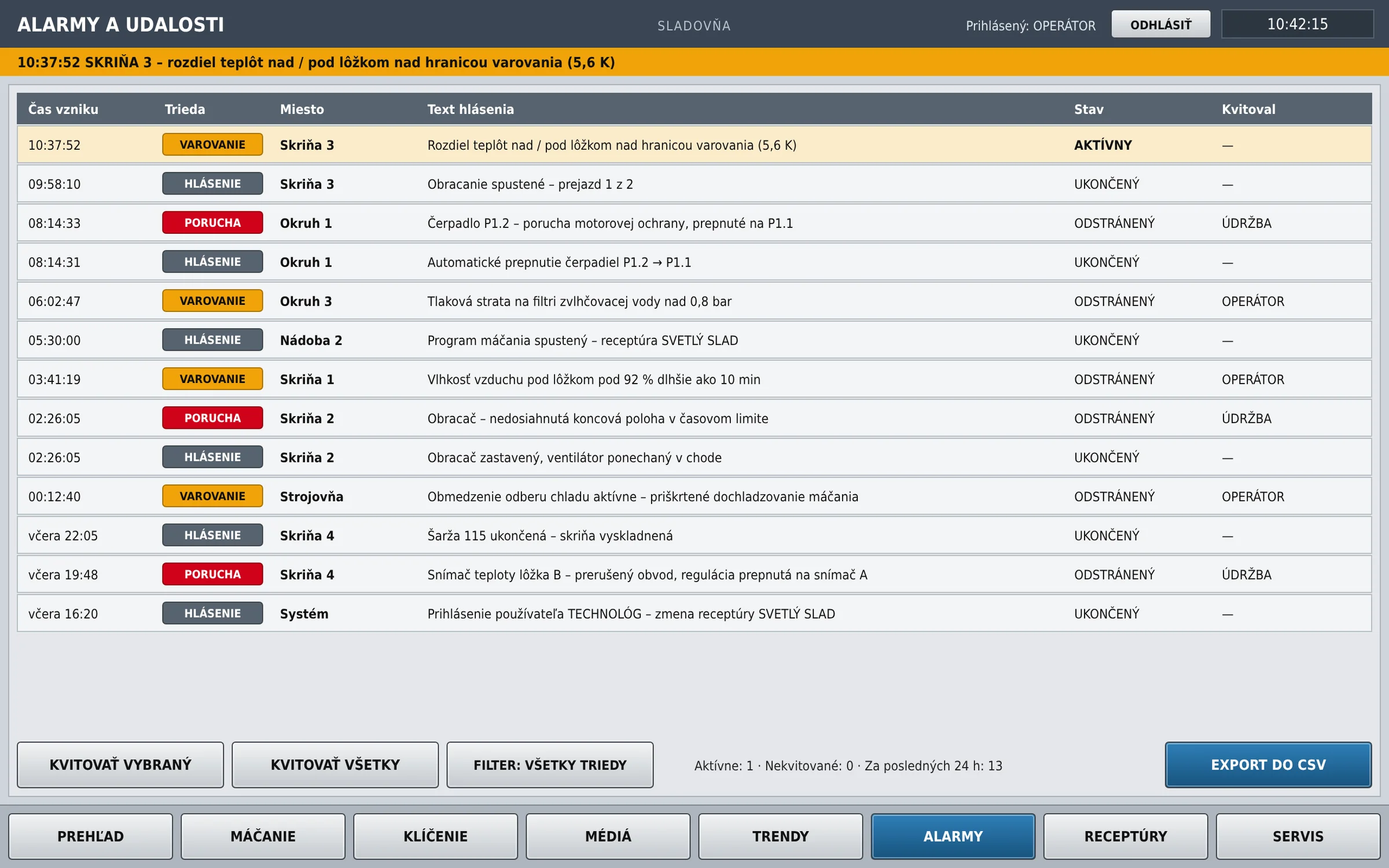
Alarms. Alarms and events with time of occurrence, class, location and status. The screen is redrawn; values are illustrative.
Result
Steeping and germination run to the recipe with no manual valve or damper adjustments. The plant room knows the malting plant’s demand in advance. A single pump or sensor failure does not stop the batch.
Our role
Automation engineer: functional specification, signal list, program and HMI, commissioning, on-site tests, operator training.
The operator’s name is omitted. Values on the screens are illustrative.